
Acute pancreatitis
Pancreatic inflammation secondary to inappropriate activation of enzymes and autodigestion
Epidemiology
[edit | edit source]- Increasing since 2000
- Up to 80% caused by gallstones/alcohol
Natural history
[edit | edit source]- 10-20% have a rapidly progressive inflammatory response - prolonged hospital stay, morbidity, mortality
- Risk of death in severe pancreatitis 10-50%, especially with MODS
- Mortality in the first two weeks is due to MODS
- Mortality after two weeks is from sepsis
Aetiology
[edit | edit source]GET SMASHED
- Gallstones
- Biliary sludge or gallstones on imaging
- Dilated CBD (>=8mm in patients <75, >=10mm patients >75)
- ALT>2x upper limit normal (PPV >95% for biliary aetiology, when pancreatitis has been diagnosed)
- Ethanol
- Look for LFTs consistent with alcohol liver disease
- Trauma
- Blunt abdo trauma
- Bile duct injury
- Steroids
- Mumps + Viruses
- HIV, coxsackie, CMV, mumps
- Autoimmune/anatomical
- Scorpions and other venoms/splenic embolisation
- Hypercalcaemia
- Hyperlipidaemia
- Need lipids >11.3mmol/L
- Suspect with trigs >25, and confirmed with trigs >50
- Can see a pseudohyponatraemia in this setting
- Consider risks
- Primary hypertriglyceridaemia - familial syndromes
- Secondary
- Diabetes
- Meds - tamoxifen etc, clomiphene, protease inhibitors, antiretroviral agents, propofol, olanzapine, mirtazapine, retinoids, thiazide diuretics, betablockers
- Pregnancy
- Alcohol
- Hypothyroidism
- Note that hypertriglyceridaemia secondary to hypothyroidism, DM or alcohol does not typically cause pancreatitis
- ERCP/surgery
- 3% if surveillance, 5% if removal of stone, 25% if procedure on Sphincter of Oddi
- More common in young females and prior history of ERCP pancreatitis
- More common with multiple attempts at cannulation
- Mild in 95% of patients
- May be possible to prevent with use of indomethacin
- Drugs
- Sulfonamides, metronidazole, erythromycin, tetracyclines, didanosine, thiazides, furosemide, statins, azathioprine, 6-mercaptopurine, 5-aminosalicyclic acid, sulfasalazine, valproic acid, HIV antiretroviral agents.
Pathophysiology
[edit | edit source]- Likely the result of inappropriate activation of proenzymes inside acinar cells
- Leads to autodigestion of normal pancreatic parenchyma, which triggers acinar cells releasing proinflammatory cytokines, propagating the response locally and systemically
- In severe cases, the local inflammatory response causes local haemorrhage and pancreatic necrosis
- SIRS can also worsen injury due to pancreatic ischaemia
- 80-90% of patients with acute pancreatitis have a self-limited inflammatory cascade -> mild pancreatitis
- Gallstones
- Caused by either increased pancreatic duct back pressure, or bile salt reflux into the pancreas
- Injury to acinar cells, triggering a cascade of pro-inflammatory changes
- Alcohol
- Only seen in 5-10% of heavy drinkers
- Risk factors - >100g/day for at least 5 years, smoking (RR 4.9), genetic predisposition
- Alcohol probably causes pancreatic injury via a number of mechanisms, although it has not been fully delineated
- Pancreatic processing of alcohol leads to damaging metabolites through both oxidative and non-oxidative pathways, such as acetaldehyde and fatty acid ethyl esters
- Increased synthesis of digestive and lysosomal enzymes
- Possible chronic sensitisation of acini to CCK
- Precipitation and increased viscosity of pancreatic secretions - protein plugs in small ducts - progressive inflammation and fibrosis, leading to loss of acinar, islet and ductal cells
- Premature activation of trypsinogen and other digestive and lysosomal enzymes
- Anatomical
- Obstructed flow of pancreatic juice, secondary to tumour (uncommon), parasites, or congenital defects (pancreas divisum or annular pancreas)
- Hypercalcaemia - activation of trypsinogen, and intra-ductal precipitation of calcium leading to ductal obstruction
- Lipase release leads to fat necrosis and digestion, with subsequent reaction of fatty acids and calcium to create soaps, or 'saponification'
Presentation
[edit | edit source]- Epigastric or periumbilical pain, constant, radiating through to back (cardinal symptom)
- Nausea or vomiting that does not relieve pain
- Hypovolaemia
- Retroperitoneal bleeding:
- Grey Turner sign - flank ecchymosis
- Cullen sign - periumbilical ecchymosis
- Jaundice - can be choledocholithiasis or oedematous pancreatic head causing CBD obstruction
- Pleural effusion - most commonly left
Diagnosis:
[edit | edit source]- Two of the following (Atlanta criteria)
- Clinical history/examination consistent with pancreatitis
- Lipase/amylase >3 times upper limit of normal (lipase rises within 4-8 hours and peaks at 24 hours, and often stays high for 1-2 weeks. Lipase is better in EtOH pancreatitis, and has a slightly longer half-life (7-13.5 hours))
- Amylase rises within 6-12 hours of symptoms, and returns to normal in 3-5 days. It can also be elevated in PUD, mesenteric ischaemia, salpingitis and macroamylasaemia.
- Radiological evidence pancreatitis
Imaging
[edit | edit source]- USS - useful to identify gallstones, not particularly good for seeing the pancreas
- CT portal venous phase
- MRCP indications: acute pancreatitis with no known aetiology to rule out pancreas divisum, IPMN, or a small ductal tumour
Scoring systems probably don't have clinical relevance
[edit | edit source]- Lots of systems, conflicting evidence
- The most useful approach:
- During admission, use a three-dimensional approach to predict risk:
- Risk factors (age, comorbidity, BMI)
- Clinical risk stratification (persistent SIRS)
- Monitoring response to initial therapy (persistent SIRS, BUN, creatinine)
- Use BISAP, Atlanta or even just SIRS criteria
- Apache II can be useful if patient is in ICU
- Ignore Ranson/Glasgow
- During admission, use a three-dimensional approach to predict risk:
- SIRS criteria
- Persistent SIRS from admission = mortality 25%
- SIRS at admission but not persistent 8%
- No SIRS 0%
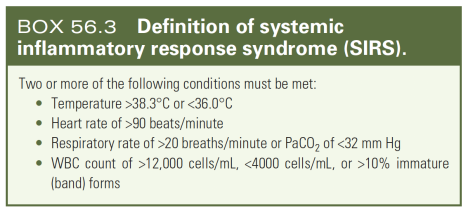
- BISAP predicts mortality, quite simple, easy to use, performs on par with more extensive scores
- Factors at admission (one point for each): BISAP
- BUN: Urea >8.92mmol/L
- Impaired mental status
- SIRS criteria >=2
- Age >60
- Pleural effusion present
- 0-2 points: mortality <2%
- 3 or more points: mortality >15%
- Factors at admission (one point for each): BISAP
- Modified Atlanta:


- Atlanta radiographic classification:
- Interstitial oedematous
- Necrotising
- Acute peripancreatic fluid
- Pancreatic pseudocyst
- CT severity index
- APACHE II
- Predicts ICU mortality, really only useful with ICU-style investigations e.g. arterial BP
- Glasgow-Imrie criteria (1984) predicts severity, but requires values from 48 hours after admission
- Similar to Ranson
- Not used any more
- Ranson predicts mortality (published 1974)
- Disadvantage - needs scores at 0 and 48 hours post admission
- Mainly used to rule out severe pancreatitis, but low PPV


Initial medical management:
[edit | edit source]- Analgaesia:
- Don't give NSAIDs. ?PUD
- Paracetamol probably IV if vomiting
- Initial trial of endone + fluid resus, however often need PCA
- No evidence opioids worsen outcomes, despite supposed sphincter of Oddi contraction
- Antiemetics
- IV PPI - prevent stress ulceration
- Early enteral feeding, unless ileus, pain or intubation
- 20% of severe AP patients get recurrent pain after restarting diet
- Enteral feeding reduces the need for surgery, but TPN can be considered if failing to meet requirements
- NJT feeds if gastric outlet obstruction is present (according to Schein, if gastric aspirates are >250mL/6 hours). Start at 10mL/hr and increase gradually until 40mL/hr is reached)
- Investigate cause
- USS vs MRCP to rule out biliary pathology
- FBE, UEC, LFT, Lipase, CRP, CMP, fasting lipids (don't need to do it unless suspicious this is the cause - see above)
- Consider INR if liver derangement
- Erect CXR - rule out perf ulcer, plus check for ARDS
- CT - only if unclear diagnosis or severe abdominal pain where perforated viscus or bowel ischaemia may be considered
- Strict FB - may need IDC if severe or does not respond to resuscitation
- Supplemental oxygen (to try and optimise perfusion)
- Correct fluids with CSL (vomiting, poor oral intake, increased resp losses, diaphoresis, oedema)
- 5-10ml/kg/hr until HR<120, MAP 65-85, normal lactate and UO 0.5-1ml/kg/hr
- Going to need a lot. Remember pancreatitis pain is worse if dehydrated. Be aggressive.
- CSL better than saline with pancreatitis
- Correct electrolytes
- VTE prophylaxis
- ?Thiamine
- ?ICU if persistent shock for vasopressors after initial resuscitation
- Grade severity - Atlanta - mild/mod/severe - or use SIRS criteria on admission and again at 48/24
- Antibiotics if acute pancreatitis and an active infection (cholangitis, UTI, pneumonia, catheter-related infections, bacteraemia, infected necrosis)
Investigation for aetiology
[edit | edit source]- USS - to look for gallstones
- Trigs/calcium
- LFTs
- IgG4 - although UTD says don't need to do this, it seems to be standard of care in Australia if no other obvious cause
- Genetic testing in young (<35) or FHx - PRSS1, SPINK1, CFTR, CTRC, CASR, Claudin-2
- But these would all be organised by geneticist, I think
- Costs $300 and requires referral with justification
- HPB surgeon says test it in young patients with recurrent presentations
- Consider cancer if other suggestions of it
- MRCP +/- secretin
- EUS - microlithiasis, ductal abnormalities, small tumours near ampulla
Course:
[edit | edit source]- Daily bloods including CRP
- Don't repeat lipase
- CRP >150 at 48 hours is reasonably predictive for severe course (sp 80%, se 76%)
- Early deaths - MODS from SIRS
- Late deaths - MODS from necrotic sepsis
- Feed early (once pain is better) in mild disease
- Consider enteral tube feeding around 72 hours in for severe AP (NGT and NJT are comparable, either is ok)
- CT 3-5 days after symptom onset if no improvement or deterioration (pancreatic necrosis typically becomes apparent 72 hours after onset)
Gallstone pancreatitis
[edit | edit source]Indications for ERCP:
[edit | edit source]- Cholangitis
- Cholangitis = fever + any of: CBD stones OR dilated CBD OR progressive cholestasis (bili >40). If cholangitis is suspected, aim ERCP within 24 hours.
- Persistent CBD obstruction
- Dilated CBD
- Obstructing stone in CBD on MRCP (consider at 72 hours)
- Increasing LFTs without cholangitis (do MRCP first - usually do it after 24-48 hours - give them a chance to improve on their own - could be just pancreatic head oedema)
- Cholangitis
- Urgent ERCP doesn't make a difference in patients with severe acute gallstone pancreatitis if they don't have cholangitis or significant cholestasis - might as well treat conservatively and take out GB after a few days if possible - Lancet article. Cholangitis will happen more often in conservatively-managed patients, but just do an ERCP at that point.
- ERCP and sphincterotomy effectively prevents recurrent biliary pancreatitis and is especially useful in elderly patients (according to Schein)

Cholecystectomy
[edit | edit source]- If no cholecystectomy is done, there's a 25% risk of recurrence
- Cholecystectomy in ALL medically fit patients once pancreatitis settled - during index admission if mild. Traditionally this has meant once pain and LFTs have normalised, but evidence is now suggesting we can do it at 48 hours or even earlier
- Unclear at this time what the best thing to do is with moderate or severe pancreatitis - retrospective data says slightly higher risk profile if done during index admission, but no good evidence
- Usual practice is, if complicated or severe disease, wait until all inflammation has resolved, and all pockets of fluid resolve or stabilise
In pregnant patients:
[edit | edit source]- Can lead to complications: preterm labour, prematurity, in utero fetal death
- First trimester is worst - low rate of term pregnancies, high rate of recurrence in same pregnancy - aim conservative treatment then lap chole
- Second trimester - safest time to operate - can operate +/- ERCP
- Third trimester - conservative treatment +/- ERCP, aim lap chole post-partum
Hypertriglyceridaemia pancreatitis:
[edit | edit source]- A patient with epigastric pain and high triglycerides (>20 or so) probably has hypertriglyceridaemia pancreatitis, even if their lipase is normal or only mildly elevated. The lipaemic blood can mess with the results and probably underestimates the true lipase level.
- Lipotoxicity caused by pancreatic metabolization of trigs into free fatty acids by pancreatic enzymes
- Most common in south Asian patients
- Anyone with triglycerides >11mmol/L is high-risk
- 5% risk of developing it with trig > 11.3, 10-20% with trig > 22.6
- If 'worrisome features' (lactic acidosis, end-organ dysfunction, >= 2 SIRS criteria, or hypocalcaemia) need apharesis
- Otherwise treat with insulin infusion until triglycerides <5.6 mmol/L
- BD triglycerides and K+
- Set rate insulin infusion - generally 3 units per hour is reasonable, with concurrent 5% glucose, target BSL 6-15
- Check BSL and ketones prior
- NBM or clear fluids to start with
- Once triglycerides down <10, common practice to cease infusion (sometimes switch to subcut insulin) and start fenofibrate/fish oil)
- Needs long-term follow-up with endocrinologist and medical r/v while inpatient for long-term lipid control
Autoimmune pancreatitis
[edit | edit source]- Uncommon overall
- Not commonly a cause of ACUTE pancreatitis
- Suspect in those with painless obstructive jaundice (most common) or diffusely enlarged pancreas on imaging, who have other autoimmune conditions
- Type 1
- Associated with high IgG4 levels and obstructive jaundice in older men
- Often seen as part of an IgG4-related disease syndrome
- Sclerosing cholangitis
- Retroperitoneal fibrosis
- Sclerosing sialadenitis
- Type 2
- Pancreas-specific disease - often presents with acute pancreatitis
- Often have normal IgG4
- Requires tissue sampling, as no biomarker
- 'idiopathic duct-centric pancreatitis'
- Often seen with IBD
- Diagnosis
- Histology in the setting of supportive serologic studies
- EUS and MRCP if suspected (also need to exclude pancreatic cancer)
- Treatment
- Glucocorticoid - typically dramatic response - if no response you need to suspect cancer